Academic Writing
In 2021-2022 I published four essays whilst studying Metaphysics, Epistemology, Critical Reasoning, Philosophy of Science, Ethics, and Philosophy of Mind at Oxford University’s Department for Continuing Education.
These may be interesting if you want to see what philosophical writing looks like.
I was awarded the first prize in the Oxford Philosophical Society Student Essay Competition, Hilary Term 2022, for my entry in Philosophy of Mind: “Are Beliefs in the Head?” TalbotPrize Link

Critically assess constructive empiricism.
Bas van Fraassen’s constructive empiricism provides anti-realists with a strong alternative account to challenge the views of scientific realists, especially concerning the interpretation of unobservables in scientific theory.
Realists have responded with several important criticisms of constructive empiricism. In this short paper I find that constructive empiricism, whilst offering appealing modesty regarding what constitutes scientific knowledge, incorporates a vagueness that scientists often seek to avoid.
How might free will be compatible with determinism?
Philosophers and scientists struggle to articulate a coherent worldview that simultaneously accommodates both free will and determinism.
Arguments for determinism undermine the ground on which belief in free will rests, yet many are not prepared to give up the idea of free will so easily. I will argue, following a line of reasoning proposed by Christian List, that determinism and free will can be compatible. I find that List offers an appealing and plausible account of how free will can be compatible with determinism.

How deontologists can be moral particularists
Some have claimed that, as deontologists insist on moral rules, they cannot be particularists.
However I will argue that because deontologists believe our actions should be guided by certain duties; and our duties can be specifically and sufficiently defined by particularism; deontologists can be particularists.
Are beliefs in the head?
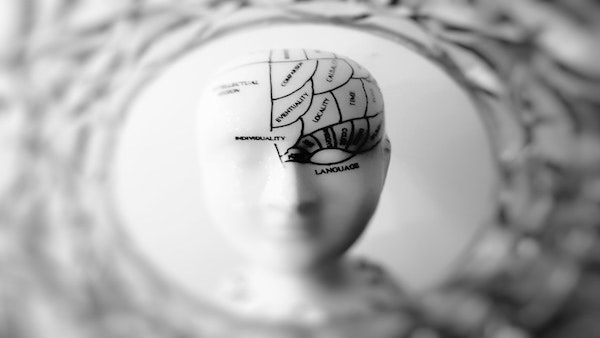
It might seem an obvious statement of fact that beliefs are ‘in the head’. But to philosophers of mind, this is far from obvious. Externalists claim that beliefs consist in a coupled relationship between the believer and external objects.
I argue that externalist theories, and particularly the ‘active externalism’ of Clark and Chalmers in ‘The Extended Mind’ (1998) offer convincing evidence that beliefs are not solely ‘in the head’.